

AI & Data
Building an AI Data Cloud on Snowflake: A Guide for Thai Enterprises
The problem is not too little data
Most Thai enterprises do not have a data shortage. They have a data-access problem. Sales sit in the POS, customers in the CRM and loyalty system, orders in e-commerce, stock and finance in the ERP — each a separate island with its own login, its own export and its own version of the truth. Leadership asks a simple question — how did the promotion actually perform across all channels last week — and the answer takes three teams and two days to assemble, by which point the moment has passed.
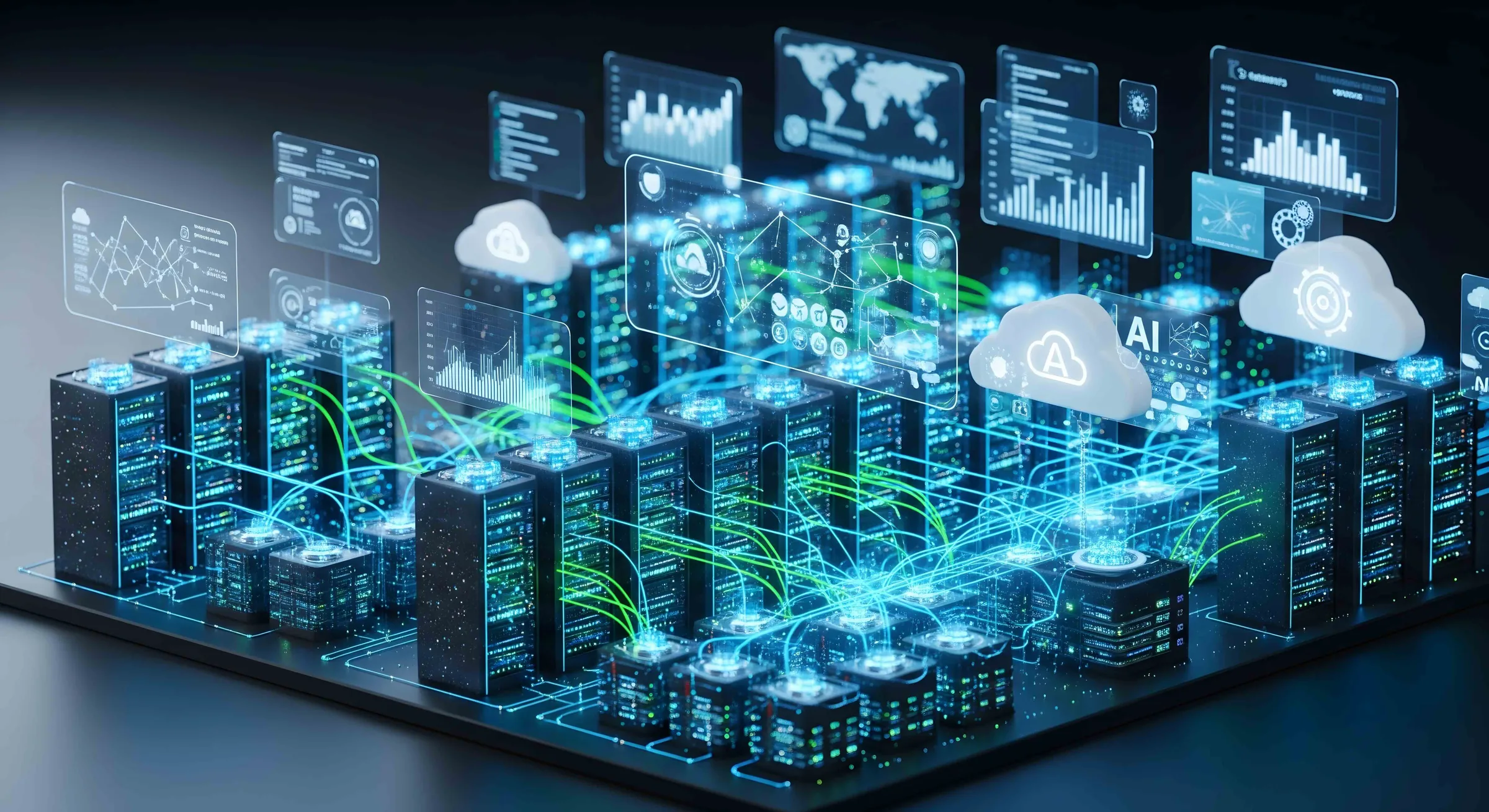
An AI Data Cloud fixes the access problem first, and the intelligence problem second. It brings every source into one governed platform, gives everyone the same numbers, and makes the data ready for AI to run on top. On Snowflake, that platform is production-grade from day one rather than a science project.
What an AI Data Cloud on Snowflake actually is
It helps to be concrete about why Snowflake, specifically, has become the default choice for this.
- Storage and compute are separate. You pay for storage cheaply and spin compute up only when a query runs, so you are not paying for a warehouse that sits idle overnight. Costs track usage instead of peak capacity.
- Every source lands in one governed place. ERP, CRM, POS, e-commerce and IoT feed into a single platform with consistent access controls and lineage — one source of truth, not five exports.
- AI and ML run against the data in place. Models train and score directly on the governed data without copying it out to a separate environment, which is faster and far easier to govern.
The contrast with a traditional data warehouse is stark: legacy warehouses need manual scaling, separate tooling for analytics versus AI, and constant babysitting. An AI Data Cloud is elastic and unified by design.
Why the partner matters — and why partner status is worth checking
Snowflake is powerful, but it is a platform, not a solution. The value comes from how it is architected, how data is modelled, how pipelines are built and governed, and how it connects to the business questions you actually need answered. That is delivery work, and it is where a partner earns its keep.
It is worth checking that a prospective partner is an official Snowflake partner, listed in Snowflake's own partner directory — it is a simple, verifiable signal that the firm has real, recognised Snowflake practice rather than a single certification and a sales deck. TMES is an official Snowflake partner and delivers Snowflake platforms alongside dbt for transformation, AWS and Alibaba Cloud for infrastructure, and BI tools such as Metabase and Tableau on top.
How an implementation actually runs
A well-run Snowflake implementation is not a monolithic project that disappears for a year and emerges finished. It moves in clear stages, each delivering something usable.
- Define the data strategy. Agree the priority questions, ownership, and governance framework before touching infrastructure. The goal is business outcomes, not a warehouse for its own sake.
- Stand up the platform. Deploy Snowflake with the right access model, then build ELT/ETL pipelines — typically with dbt — to bring the first priority sources in cleanly.
- Deliver first dashboards. Get real, trusted dashboards into leaders' hands early — usually within the first couple of months — so the platform proves its value before the full estate is connected.
- Enable AI use cases. With a governed foundation in place, layer on forecasting, recommendation, anomaly detection and segmentation models that run directly on the data.
The sequencing matters: value arrives in months, not at the end, and every later phase builds on a foundation the business already trusts.
The Thai considerations: residency, PDPA and governance
For Thai enterprises — especially in retail, F&B and financial services — data governance is not an afterthought. Three points deserve early attention:
- Data residency. Snowflake runs on AWS and Alibaba Cloud regions that serve Thailand, so data can be kept in-region where policy or regulation requires it.
- PDPA alignment. Personal data needs consent handling, access control and auditability. A governed platform makes PDPA compliance a property of the architecture rather than a manual effort.
- Independent assurance. Certifications such as ISO 27001, ISO 27701 and ISO 20000-1 mean the security, privacy and service management around your data are independently audited — the standard TMES delivers under.
Where it pays off
The return on an AI Data Cloud is not abstract. The scenarios Thai enterprises get value from first are consistent:
- Retail network analytics — sales, inventory and promotion performance across every branch, in real time, in one view.
- Customer segmentation — 360° profiles built from POS, loyalty and digital channels, powering personalised campaigns and better retention.
- Demand forecasting — aligning inventory with predicted demand to cut overstock and improve availability.
- Store-expansion planning — using performance and geospatial data to evaluate new-site potential rather than guessing.
Each of these is a question the business already asks. The platform is what lets it be answered in minutes, with evidence, instead of instinct.
Talk to TMES
TMES designs, builds and operates Snowflake AI Data Cloud platforms for retail, F&B, financial-services and enterprise clients across Thailand and Southeast Asia — as an official Snowflake partner, under ISO-certified security and privacy frameworks. Explore the AI, Data Cloud & Analytics solution and the Data Solutions platform, or request a data strategy workshop to map your first priority use cases and a phased path to production.
This article is general guidance for enterprises in Thailand and does not constitute a specific implementation or financial recommendation for any individual organisation.
Related
Keep reading
 AI & Data
How AI Is Transforming Enterprise Productivity: A Practical Guide for Business Leaders
AI is no longer a future concept — it is reshaping how enterprises operate today. From real-time data intelligence and automated compliance to smarter supply chains and personalised customer experiences, discover how AI is delivering measurable productivity gains across every major business function.
 AI & Data
From Data Lake to AI Factory: Building Enterprise AI at Scale
Most enterprises have spent years accumulating data. The organisations winning with AI are not those with the most data — they are those that have built the pipelines, governance, and model infrastructure to turn raw data into intelligent, automated decisions.
AI & DataBuilding AI-Ready Data Organisations
AI success depends on data foundation maturity — yet many enterprises are investing in AI tools before their data infrastructure is ready. Discover the key steps to building a unified, governed data platform that unlocks real analytics and AI value.
Start a Strategic Technology Conversation
Partner with TMES to design scalable transformation programmes combining consulting, platform implementation and managed services.