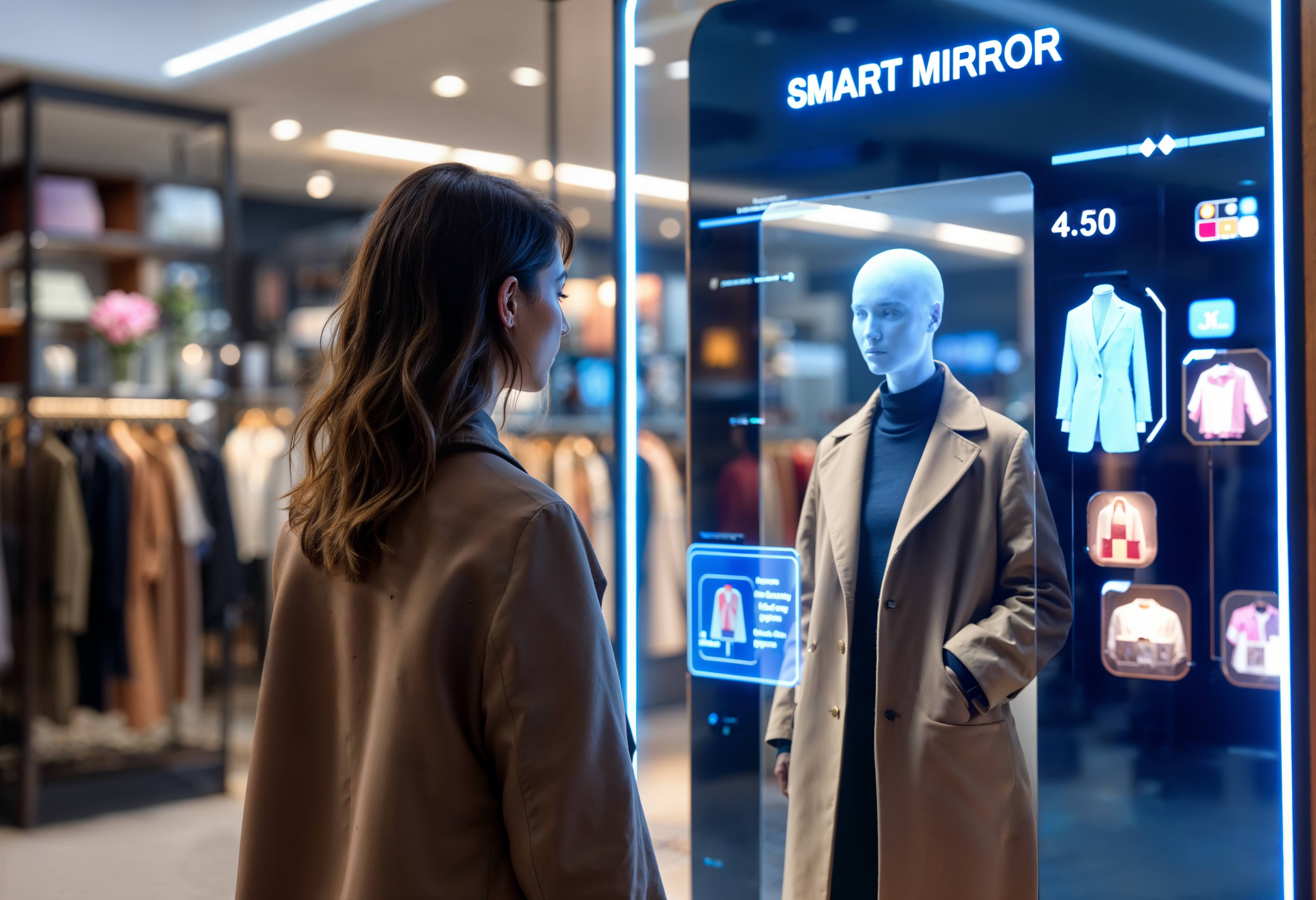
AI-Powered Retail: Transforming Customer Experience and Operations
Artificial intelligence is no longer a future consideration for retailers — it is an operational reality reshaping how goods are bought, sold, forecasted and fulfilled. Regional enterprises that move early will define the competitive standard for the next decade.
Executive Summary
Retail is undergoing its most significant structural transformation in a generation. The convergence of AI, real-time data, and connected commerce infrastructure is redefining what is possible across every function of the retail enterprise — from demand forecasting and inventory optimisation to hyper-personalised customer engagement and autonomous store operations.
For retailers in Southeast Asia, the opportunity is substantial. The region's young, digitally-native consumer base, rapid smartphone penetration and growing middle class create the conditions for AI-driven retail strategies to deliver measurable returns at speed. However, the organisations that will capture this opportunity are those that treat AI as a foundational operational capability — not a marketing initiative.
This article examines the key areas where AI is creating competitive advantage in retail, the infrastructure and data foundations required to capture that advantage, and the strategic approach that enterprise retailers should take to deploy AI effectively.
The AI Imperative in Retail
Retail has always been a data-rich environment — transaction records, loyalty programmes, supplier feeds, inventory counts, foot traffic patterns. What has changed is the ability to analyse this data in real time, at scale, and to act on those insights autonomously.
AI and machine learning models can process millions of data points simultaneously to identify patterns that human analysts would take weeks to find and act on. When connected to operational systems, these models can trigger automatic actions — reordering stock, adjusting prices, personalising promotions, routing customer service queries — without requiring manual intervention.
The economics are compelling. McKinsey research suggests that AI in retail can unlock value equivalent to 1–2% of annual revenues through operational efficiency gains alone, with additional upside from revenue growth through personalisation and improved customer experience. For a retailer generating THB 5 billion in annual revenue, that represents a significant and measurable return.
Key Application Areas
Demand Forecasting and Inventory Intelligence
Traditional demand forecasting in retail relies on historical sales data and seasonal patterns. AI-powered forecasting goes significantly further, incorporating real-time signals from multiple sources: weather data, local events, social media trends, competitor promotions, macroeconomic indicators and supply chain lead times.
The result is forecast accuracy improvements of 20–50% compared to statistical models, with corresponding reductions in overstock and stockout events. For categories with high perishability or seasonal velocity — fresh food, fashion, electronics — the financial impact of improved forecasting is immediate and material.
Inventory intelligence extends beyond forecasting. AI models can identify optimal safety stock levels for each SKU at each location, detect slow-moving inventory before it becomes a markdown liability, and recommend assortment adjustments based on emerging demand signals. These capabilities allow retailers to operate leaner inventory positions without increasing service risk.
Hyper-Personalisation at Scale
Personalisation is not new in retail — loyalty programmes have delivered segmented communications for decades. What AI enables is personalisation at the individual level, in real time, across every customer touchpoint.
AI-powered recommendation engines analyse individual browsing behaviour, purchase history, cart abandonment patterns, and contextual signals to surface the most relevant products, offers and content for each customer. Unlike rule-based personalisation, machine learning models continuously refine their recommendations based on outcomes — improving accuracy over time without requiring manual configuration changes.
The commercial impact of effective personalisation is well-documented. Retailers report 10–30% increases in average order value, higher conversion rates on promotional campaigns, and improved customer retention among segments that receive personalised engagement. For omnichannel retailers, the ability to maintain personalisation consistency across digital and physical touchpoints is a particular differentiator.
Dynamic Pricing and Promotion Optimisation
Price management in retail has traditionally been a manual, rules-based process: seasonal markdowns, promotional calendars, competitive matching. AI enables a fundamentally different approach — dynamic pricing that continuously adjusts prices based on real-time demand signals, competitive intelligence, inventory positions and margin targets.
AI-powered promotion optimisation goes beyond price, analysing which promotional mechanics (discount depth, bundle offers, loyalty multipliers) generate the best response from different customer segments, in different product categories, at different points in the customer journey. This allows promotional investment to be allocated where it delivers the greatest return.
Autonomous and Frictionless Store Operations
In physical retail, AI is enabling a shift toward autonomous operations — stores that can manage routine operational tasks without constant human supervision. Computer vision systems can monitor shelf availability in real time, detect misplaced products, and flag planogram compliance issues. AI-powered queue management systems can predict checkout demand and direct customers to reduce wait times.
At the frontier, cashierless checkout technologies — where cameras and sensors automatically track what customers take from shelves and charge them on exit — are moving from pilot to commercial deployment. While full cashierless formats remain a premium investment, component technologies including smart baskets, self-checkout guidance AI and loss prevention systems are increasingly accessible to mainstream retailers.
AI-Augmented Customer Service
Customer service is one of the highest-cost functions in retail operations, and one where AI is delivering rapid efficiency gains. Large language models (LLMs) now power conversational AI assistants capable of handling a broad range of customer queries — order status, returns, product availability, store information — with response quality that rivals human agents.
For retailers with large contact centre operations, the cost reduction opportunity from AI-augmented service is significant. More importantly, AI enables 24/7 service availability in multiple languages without proportionate cost increases — a critical capability in the multilingual Southeast Asian market.
Data and Infrastructure Foundations
The value of AI in retail is contingent on the quality and accessibility of the underlying data. Retailers that have fragmented data landscapes — with transaction data in one system, loyalty data in another, inventory in a third — will struggle to deploy AI at scale until they resolve this foundational issue.
Effective AI-powered retail requires a unified data platform that brings together data from all operational systems in real time. This means integrating POS systems, e-commerce platforms, loyalty programmes, supply chain systems, CRM and external data feeds into a coherent data model that AI models can consume.
Cloud-native data platforms — particularly those that separate compute and storage and support streaming data ingestion — provide the architectural foundation for this requirement. Retailers that have invested in modernising their data infrastructure are significantly better positioned to accelerate AI deployment than those still operating on-premises data warehouses.
Strategic Approach for Regional Retailers
Start with high-impact, high-data-availability use cases. Demand forecasting and inventory optimisation are typically the highest-value starting points for retail AI programmes, because the required data (sales history, inventory records) is almost always available, and the financial impact is directly measurable. These use cases also build internal confidence and AI competency that can be applied to more complex applications.
Invest in data infrastructure before — or in parallel with — AI deployment. AI models are only as good as the data they are trained on. Organisations that attempt to deploy AI on top of fragmented, low-quality data environments will be disappointed with the results. A parallel investment in data quality, data integration and data governance is essential.
Build AI capabilities incrementally through a portfolio approach. Rather than committing to a single large AI transformation programme, build a portfolio of AI initiatives at different stages of development — some in production and delivering value, some in pilot, some in exploration. This approach builds learning and capability continuously, while managing risk.
Consider the human dimension of AI deployment. AI changes the work of frontline and operational staff. Demand planners working alongside AI forecasting tools need to understand how models work and how to interpret AI recommendations. Store associates working with AI inventory systems need training and support. Change management is as important as technology deployment.
Select partners with both AI expertise and retail domain knowledge. AI capabilities without retail context will produce technically correct outputs that miss operational realities. The most effective AI solutions for retail are built by teams that understand both the technology and the specific operational, regulatory and customer dynamics of the retail environment.
How TMES Supports AI-Powered Retail Transformation
TMES brings together retail technology expertise, AI platform capabilities and regional delivery experience to help enterprise retailers deploy AI at scale. Our retail AI services span:
Data platform modernisation — designing and implementing the unified data foundations that AI-powered retail requires, integrating POS, e-commerce, loyalty, inventory and external data sources on cloud-native architectures.
AI model development and deployment — building and deploying demand forecasting, personalisation, pricing optimisation and computer vision models tailored to each client's specific retail context.
POS and retail operations technology — our retail technology practice has deep expertise in point-of-sale platforms, inventory management systems and omnichannel commerce infrastructure that form the operational foundation for AI deployment.
Ongoing managed AI services — monitoring, maintaining and continuously improving AI models post-deployment to ensure sustained accuracy and business impact.
To discuss how AI can accelerate your retail operations, contact the TMES Retail Practice at sales@tmes.co.th.
More from TMES Insights
View allFuture of Omnichannel Retail Architecture
Retail customers expect seamless experiences across physical and digital channels. Learn how leading retailers across Southeast Asia are building unified commerce architectures to drive growth, reduce complexity and future-proof their operations.
eKYC vs. Manual KYC: Which Is Right for Your Business in Thailand?
A direct comparison of electronic and manual Know Your Customer processes — speed, cost, compliance and fraud risk — to help regulated businesses in Thailand and Southeast Asia choose the right approach.
In-House IT Team vs. IT Outsourcing in Thailand: Comparing the True Cost
A practical cost comparison between building an in-house IT team and outsourcing IT operations in Thailand — covering hiring, hidden costs, scalability and when each model makes sense.